
Support Work

Support that fits into real life— not a roster.

Five ways we show up, all shaped around the person. Matched workers, clear communication, and a management team that stays involved.

NDIS Registered Provider Occupational Therapist Supported After-hours on-call, 24/7

Support work, explained

What does an NDIS support worker actually do?

In plain English: a support worker helps you live your day the way you want to — at home, out in the community, and everywhere in between. Here’s what that looks like in practice.

Everyday living

Help with cooking, shopping, cleaning and routines — the practical stuff that keeps a week running.

Getting out and about

Lifts to appointments, errands, social outings and community events, with company the whole way.

Personal care

Dignified, respectful help with showering, dressing and medication — done by trained, matched workers.

Building skills

Practice with public transport, budgeting and daily routines so independence grows over time.

Social connection

Support to catch up with mates, join clubs and try hobbies — involved, not just present.

Complex and higher needs

Extra-trained workers for complex health, behaviour support or mobility needs, with real oversight.

What should the experience with a support work company feel like?

The difference between support work that works and support work that frustrates usually comes down to a handful of simple things. This is what you should expect — and exactly how we run things.

  • You know your worker before they start

    No random faces at the door — you meet your matched worker first, and nothing is locked in until you're comfortable.

  • Someone answers the phone

    Real local management who reply within two business hours, not a call centre or a ticket queue.

  • A consistent team, not a rotating cast

    The same familiar faces each week, with any changes talked through before they happen.

  • Your goals drive the shifts

    Support is shaped around your NDIS plan and what a good week looks like for you — not a template roster.

  • Respect for your home and choices

    Workers follow your lead on how things run in your home, your way.

  • Properly trained, properly checked

    Screened workers with current checks, first aid and NDIS training, backed by hands-on oversight.

What we do

The five ways we show up

Django, a support worker, laughing with a participant as they walk a sunny coastal path

Community Access

Getting out, doing things and actually participating in the community — your pace, your plan, your call.

  • Appointments and errands without the rush
  • Markets, cafés and local events
  • Beach days, swimming or the gym
  • Getting comfortable with new places
Start with this
A support worker chopping vegetables with a smiling participant in a bright home kitchen

Daily Living Support

Practical support at home and in everyday life, so routines run the way you want them to.

  • Cooking and meal prep
  • Shopping and errands
  • Keeping home routines running smoothly
  • Personal care from trained, matched workers
Start with this
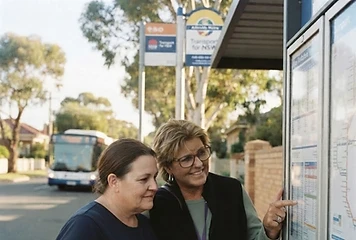
Rebekah, a support worker, helping a participant read a bus timetable at a sunny suburban bus stop

Capacity Building

Working alongside participants to develop skills, confidence and independence — at a pace that sticks.

  • Learning to use public transport
  • Building daily routines that actually last
  • Money and planning skills
  • Growing confidence in new settings
Start with this
Zahlia, a support worker, laughing over iced coffees with a participant at a local weekend market

Social Support

Support to pursue interests, hobbies, activities and genuine community participation — not just being present, being involved.

  • Hobbies, classes and clubs
  • Catching up with mates
  • Trying new things (with an exit strategy)
  • Regular social routines
Start with this
Warren, a support worker, patiently helping an older participant with a walking frame in a bright living room

Higher Support Needs

Support delivered by appropriately trained workers where additional skills or experience are required — with real oversight, not just a certificate on file.

  • Complex health or behaviour support needs
  • Experienced, deliberately matched workers
  • A consistent team, not a rotating cast
  • Hands-on oversight from our management
Start with this

A mix of a few?

Most people use a blend of supports. Tell us what a good week looks like, and we’ll shape the support around it.

Every support is delivered by a matched worker — see how the matching works below.

Tell us what a good week looks like

Where we work

NDIS support work across the Hunter & Central Coast

Our support workers live locally, right across the region — so you get someone who knows the area, not someone who spends half the shift on the freeway.

Newcastle

  • Charlestown
  • Hamilton
  • Merewether
  • New Lambton

Maitland

  • East Maitland
  • Rutherford
  • Thornton
  • Lochinvar

Cessnock

  • Kurri Kurri
  • Branxton
  • Aberdare
  • Pokolbin

Central Coast

  • Gosford
  • Woy Woy
  • The Entrance
  • Toukley

And everywhere in between — if you’re in the Hunter or Central Coast, we can come to you.

In their words

Real support work, in real words

No scripts, no stock footage. Jess talks about her NDIS supports with us here in the Hunter — and why she can’t speak more highly of her support worker, Matilda.

Her person, foundTrue connection

We don’t just fill shifts

We don’t just find someone who’s available. We find someone who fits.

Participants should have real choice over who enters their home and spends time with them. That’s not a nice-to-have - it’s the whole point.

01

Tell us about you

We learn about your support needs, personality, interests, routine and what you're actually looking for.

02

We find your people

We look at our team and identify support workers who could genuinely be a good match.

03

You choose

Meet them first. Ask questions. Decide whether it feels right. No pressure, no obligation.

04

We keep checking in

Support shouldn't become set and forget. Our team stays involved, every step.

No right person? No match. We won’t take on a referral we can’t staff properly — we’d rather run another recruitment round until we do.

Also in the NND family

Need a Functional Capacity Assessment too?

Our sister company Nourished Not Deprived has dietitians, psychologists, speech therapists, behaviour support practitioners and occupational therapists under the one roof — same family, same standards, a different toolbox.

Visit Nourished Not Deprived

FAQs

The practical stuff, answered

What support actually looks like — in plain English, not NDIS-speak.

See how it fits? Let's talk.

One short form and we'll start matching — usually within two business hours.